How to Write a Student Resume With Little Work Experience
No job history? Learn how to write a strong one-page student resume using education, projects, activities, volunteer work, and skills, with clear examples.
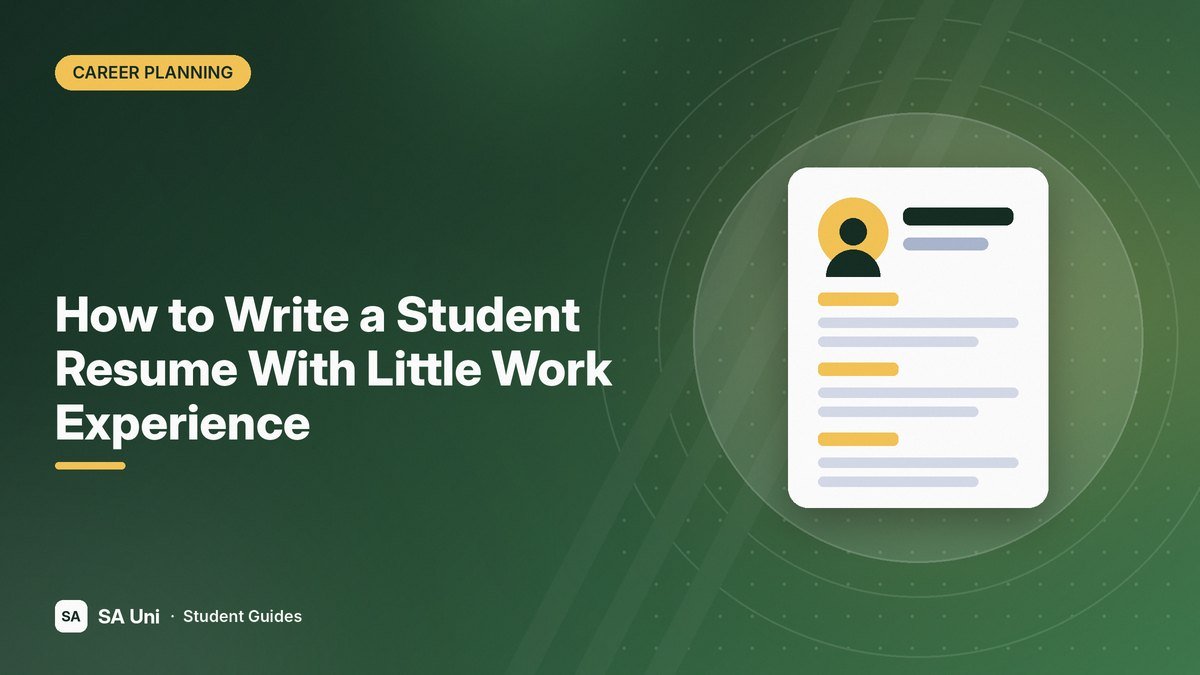
Writing your first resume can be frustrating when you feel like you have nothing to put on it. But employers hiring students and recent graduates do not expect years of experience. They want to see potential, responsibility, and relevant skills. You probably have more to offer than you think.
Choose a Clean, Simple Format
For most students, a one-page resume is best. Use a clean layout with clear headings, consistent fonts, and plenty of white space. Avoid photos, graphics, and complicated designs. Many employers use applicant tracking systems that scan resumes, and simple formats are easier for them to read.
Section 1: Contact Information
Include your name, phone number, professional email address, city and state, and a LinkedIn profile or portfolio link if you have one. You do not need to include your full street address.
Section 2: Education
For students, education usually goes near the top. Include:
- Your college name and location
- Degree and major, and expected graduation month and year
- GPA, if it is 3.0 or higher (or if the employer requires it)
- Honors, scholarships, and dean's list recognition
- Relevant coursework, especially for technical roles
High school information can be included during your first year or two of college, then removed as you gain college experience.
Section 3: Experience
"Experience" does not have to mean professional jobs in your field. It can include:
- Part-time and summer jobs, such as retail, food service, or childcare
- Campus jobs and work-study positions
- Research assistant roles
- Freelance or gig work
- Family business work
For each position, list your title, the organization, location, and dates, followed by two to four bullet points describing what you accomplished.
Write Strong Bullet Points
Start each bullet with an action verb and include results or numbers when possible.
| Weak | Strong |
|---|---|
| Worked at the register | Processed 150+ customer transactions per shift with consistent accuracy |
| Helped with social media | Created weekly Instagram posts that grew club followers by 40% in one semester |
| Tutored students | Tutored 12 high school students weekly in algebra, helping several raise their grades |
Useful action verbs include led, organized, created, analyzed, managed, coordinated, designed, improved, trained, and researched.
Section 4: Projects
Projects are one of the best ways to show skills when you lack work experience. Include significant class projects, research papers, personal projects, hackathons, or competitions. Describe what you did, the tools you used, and the outcome.
Section 5: Leadership and Activities
Clubs, sports, student government, and campus organizations show teamwork, time management, and leadership. Focus on your contributions, especially if you held a leadership role or organized events.
Section 6: Volunteer Experience
Volunteer work demonstrates commitment and initiative. Treat it like a job: list your role, organization, and accomplishments.
Section 7: Skills
List specific skills relevant to the job, such as:
- Software: Microsoft Excel, Google Workspace, Canva, Python, Adobe Photoshop
- Languages: Spanish (conversational), Mandarin (fluent)
- Certifications: CPR/First Aid, Google Analytics, food handler certification
Avoid vague claims like "hardworking" or "team player." Show those qualities through your experience bullets instead.
Tailor Your Resume for Each Application
Read the job description carefully and highlight the skills and experiences that match. Use similar keywords where they honestly describe your experience. A tailored resume is far more effective than one generic version sent everywhere.
Common Mistakes to Avoid
- Typos and grammatical errors. Proofread carefully and ask someone else to review.
- Unprofessional email addresses.
- Listing duties without accomplishments.
- Including personal information like age, marital status, or a photo.
- Exaggerating or misrepresenting experience.
Get Feedback
Your college career center can review your resume for free. Professors, mentors, and professionals in your field can also give valuable advice. Update your resume every semester so it is always ready when an opportunity appears.
The Bottom Line
A strong student resume highlights your education, projects, activities, and transferable skills. Use action verbs, quantify results, keep it to one page, and tailor it for each opportunity. Everyone starts somewhere, and your first resume is the foundation for your career.
This guide is for general educational purposes. Policies, deadlines, and requirements change — always confirm details with the official source or your school. See our disclaimer.